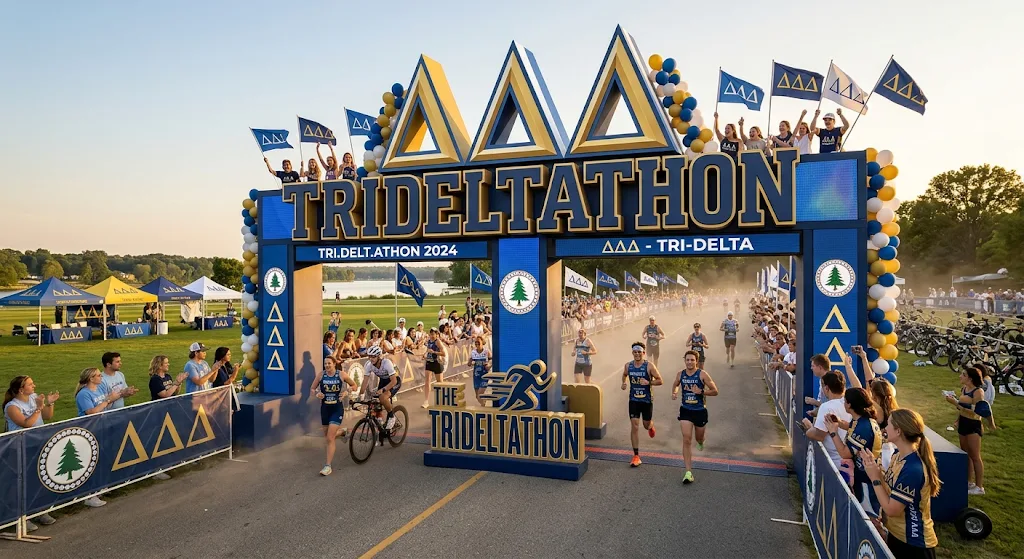
Organizing a large-scale collegiate fundraiser requires balancing complex logistics, volunteer coordination, and strategic promotion. A TriDeltathon—whether structured as a mini-triathlon, a community run, or a multi-sport charity event hosted by collegiate chapters—serves a dual purpose: raising critical funds for childhood cancer initiatives like St. Jude Children’s Research Hospital and uniting the local community.
Without a cohesive marketing framework and systematic execution plan, even the most noble philanthropic initiative risks low turnout, missed fundraising targets, and operational bottlenecks. Hosting a successful event demands treating the occasion as a comprehensive brand campaign.
This guide breaks down every phase of organizing and marketing a successful TriDeltathon. You will discover actionable frameworks for logistics management, digital audience targeting, multi-channel promotional strategies, sponsor acquisition, and post-event retention tactics that turn one-time attendees into lifelong supporters.
What Is a TriDeltathon? Understanding the core Mission
A TriDeltathon is a specialized philanthropic event organized primarily by collegiate chapters of Delta Delta Delta (Tri Delta) to raise funds and awareness for pediatric cancer research and healthcare facilities. While traditional Greek life fundraisers often rely on bake sales or internal fraternity challenges, a TriDeltathon adopts an athletic, participatory event model.
       [ Planning & Permitting ]
                  │
                  ▼
       [ Multi-Channel Campaign ]
         ├── Social & Influencers
         ├── Email Automation
         └── On-Campus PR
                  │
                  ▼
       [ Event Day Operations ]
                  │
                  ▼
       [ Post-Event Donor Retention ]
Depending on chapter resources and local facilities, these events typically take one of three primary formats:
-
Sprint Triathlons: A micro-distance race featuring a short pool swim, stationary or road cycling segment, and a 5K run.
-
5K/10K Community Runs: A accessible road race designed for broad student body, alumni, and local resident participation.
-
Multi-Sport Challenge Days: Station-based field competitions involving teams from various campus organizations.
Transitioning from passive donation asks to active, experience-driven events fundamentally changes participant engagement. Athletic events create memorable experiences, generate shareable social media content, and offer prominent visibility for corporate sponsors.
Event Architecture: Planning and Logistics Blueprint
A seamless participant experience on race day directly drives positive word-of-mouth and high retention for subsequent years. Event planning should begin at least four to six months before the targeted race date.
Core Operations and Committee Structure
Divide your organizing team into specialized committees with clear deliverables to prevent administrative bottlenecks:
-
Logistics & Race Operations: Handles route mapping, municipal permits, safety personnel, venue booking, and equipment rentals.
-
Sponsorship & Corporate Relations: Secures local business partnerships, monetary donations, and in-kind food or merchandise contributions.
-
Marketing & Communications: Manages social media channels, campus PR, graphic design, content production, and email strategy.
-
Participant Experience & Registration: Oversees ticketing platforms, race bib distribution, volunteer check-ins, and participant inquiries.
Essential Timeline and Milestone Checklist
| Timeline | Operational Milestones | Marketing & PR Milestones |
| 6 Months Out | Secure venue/route permissions; set fundraising target; establish safety protocols. | Brand asset creation (logos, banners); website/registration landing page build. |
| 4 Months Out | Finalize sponsor packages; order race timing hardware/software; recruit volunteer heads. | Launch early-bird registration campaign; initiate corporate sponsor outreach. |
| 2 Months Out | Order participant shirts, medals, and signage; verify emergency medical coverage. | Roll out student ambassador push; initiate email lead nurture sequences. |
| 1 Month Out | Finalize race maps; submit street closure requests; secure hydration stations. | Launch targeted social media ads; publish press releases to local news outlets. |
| Race Week | Assemble packet pickup kits; set up sound systems; brief safety volunteers. | Send final pre-race logistics email; post venue arrival guides on social media. |
Developing a High-Converting Event Landing Page
Your registration page functions as the central conversion hub for your entire marketing strategy. Every piece of social content, email, and flyer should direct traffic to a dedicated landing page designed to turn visitors into registered participants or donors.
Key Elements of an Effective Event Page
-
Clear Value Proposition: Display the event name, date, location, and purpose prominently above the fold.
-
Frictionless Registration Flow: Minimize the number of form fields required to sign up. Collect essential details first (Name, Email, T-Shirt Size, Participant Category) and offer simple payment gateway integrations.
-
Transparent Financial Impact Statement: Explicitly explain how registration fees directly support pediatric cancer research and patient family care.
-
Embedded Countdowns and Social Proof: Use real-time counters showing remaining spots or total funds raised to create urgency.
-
Mobile Optimization: Ensure the page loads rapidly and functions flawlessly on mobile devices, where over 70% of student traffic originates.
Multi-Channel Digital Marketing Strategy
To maximize attendance and hit aggressive fundraising goals, deploy an integrated marketing strategy across multiple digital touchpoints.
                  ┌──────────────┐
                  │ Target Audience│
                  └──────┬───────┘
                         │
      ┌──────────────────┼──────────────────┐
      ▼                  ▼                  ▼
┌───────────┐      ┌───────────┐      ┌───────────┐
│ Meta Ads  │      │ Email     │      │ On-Campus │
│ (Campus & │      │ Nurture   │      │ Flyers &  │
│ Community)│      │ Flows     │      │ Ambassadors│
└─────┬─────┘      └─────┬─────┘      └─────┬─────┘
      │                  │                  │
      └──────────────────┼──────────────────┘
                         │
                         ▼
             [ Event Registration ]
1. Organic Social Media Content Pillars
Focus organic social media efforts on video-first platforms like Instagram and TikTok, structured around three core pillars:
-
Impact Stories: Share short, educational video clips highlighting how donations directly impact children’s medical institutions.
-
Behind-the-Scenes & Training: Post training logs, committee prep videos, and countdown reels to build anticipation.
-
Participant Spotlights: Feature registered students, alumni teams, and local community members to incentivize social sharing.
2. Strategic Campus Influencer & Organization Outreach
Expand reach beyond internal chapter followers by partnering with campus leaders and student organizations:
-
Greek Life Challenges: Create friendly competition leaderboards offering trophies or social shoutouts to fraternities or sororities with the highest participation rate.
-
Campus Athletic Clubs: Engage running clubs, triathlon teams, and campus fitness instructors as race ambassadors.
-
Student Government & Department Co-Promotion: Secure promotion in university-wide newsletters and digital bulletin boards.
3. Email Marketing Nurture Sequences
Email marketing remains one of the highest-converting tools for event sign-ups and donor retention. Set up automated sequences for two distinct audiences:
-
Past Participants: Send a 3-part sequence starting 90 days out, highlighting previous event results, early-bird registration discounts, and new event features.
-
Abandoned Registration Leads: Send an automated reminder within 24 hours to users who started filling out the registration form but failed to complete payment.
Corporate Sponsorship and Local Business Partnerships
Sponsorships offset operational costs, ensuring that a higher percentage of participant registration fees go directly to the charitable cause.
       [ Tier 1: Title Sponsor ] ───▶ Maximum Visibility & Naming Rights
       [ Tier 2: Gold Sponsor ]  ───▶ Logo on Shirt & Mile Markers
       [ Tier 3: In-Kind Partner ]───▶ Hydration & Post-Race Refreshments
Crafting a Value-Driven Sponsorship Tier
Avoid asking businesses for pure donations without offering tangible promotional value. Structure packages around brand visibility and community engagement:
-
Title Sponsor: Exclusive logo placement on all promotional material, primary banner positioning at the finish line, speaking opportunity during opening remarks, and featured mention in all press releases.
-
Gold Sponsor: Logo on the official event shirt, branded signage along specific race miles or transition zones, and dedicated social media shoutouts.
-
In-Kind Sponsors: Provide product samples (energy bars, water bottles, electrolyte drinks, participant bag goodies) in exchange for booth space in the finish area.
Pitching Local Businesses
When pitching local businesses, emphasize direct access to student demographic data and positive brand association within the university community. Focus your outreach on local gyms, sports nutrition stores, university-adjacent restaurants, and alumni-owned enterprises.
Common Event Planning Mistakes to Avoid
Managing an event with hundreds of participants presents distinct operational risks. Sidestep these common pitfalls during planning:
-
Underestimating Permit Lead Times: Municipalities and university boards often require 60 to 90 days to approve street closures, noise permits, and campus space allocations. Submit documentation early.
-
Ignoring Course Congestion: Standard 5K routes or transition areas can bottle up if too many runners start simultaneously. Implement wave starts based on estimated pace times to ensure safety.
-
Inadequate Hydration and Medical Support: Position hydration stations at least every 1.5 miles along running routes and station certified first-aid personnel at the start/finish line.
-
Vague Financial Tracking: Failing to separate operational overhead from pure charitable donations creates accounting headaches and diminishes donor trust. Maintain distinct ledgers for vendor payments and charity collections.
-
Neglecting Post-Event Communication: The campaign does not end at the finish line. Failing to follow up with participants within 48 hours sacrifices long-term donor retention opportunities.
Step-by-Step Execution Guide for Race Day
-
Step 1: Early-Morning Site Setup (04:00 AM – 06:30 AM): Position registration tables, signage, timing mats, sound equipment, and hydration stations. Walk the entire course to verify marker placement and eliminate hazards.
-
Step 2: Volunteer Briefing (06:30 AM – 07:15 AM): Gather all station volunteers, course marshals, and check-in staff. Assign radios or designate group messaging channels for real-time operational communication.
-
Step 3: Registration & Packet Pickup (07:30 AM – 08:45 AM): Open check-in desks. Ensure separate lines for pre-registered attendees and day-of registrants to process crowds efficiently.
-
Step 4: Race Kickoff & Safety Briefing (08:45 AM – 09:00 AM): Deliver brief safety instructions, acknowledge title sponsors, and introduce the cause before initiating staggered wave starts.
-
Step 5: Main Event Operations (09:00 AM – 11:30 AM): Monitor course marshals, track timing system performance, and maintain active hydration management.
-
Step 6: Awards Ceremony & Fundraising Announcement (11:30 AM – 12:15 PM): Announce age-group winners, acknowledge top individual and team fundraisers, and reveal the final donation check total to the crowd.
-
Step 7: Tear-Down & Environmental Cleanup (12:15 PM – 02:00 PM): Clear all course markers, dismantle stage equipment, collect trash along the route, and restore the venue to its original state.
Post-Event Follow-Up and Donor Retention
The period immediately following the race is critical for locking in donor loyalty and establishing a foundation for next year’s event.
The 48-Hour Communication Blitz
Within two days of race completion, execute the following sequence:
-
Publish Official Race Results and Photo Galleries: Send a dedicated email containing direct links to searchable race times and downloadable event photos.
-
Distribute the Final Impact Report: Send a personalized thank-you note to every runner, donor, and sponsor detailing the exact total amount raised for pediatric cancer research.
-
Collect Attendee Feedback: Deploy a concise 3-question survey asking participants about course layout, check-in speed, and overall satisfaction to gather data for future optimization.
FAQs
What is a TriDeltathon?
A TriDeltathon is a charity sports event—ranging from a mini-triathlon to a 5K community race—hosted by collegiate chapters of Delta Delta Delta. Its goal is to bring together students, alumni, and local community members to raise funds for childhood cancer research.
Where do the proceeds from a TriDeltathon go?
Proceeds typically benefit St. Jude Children’s Research Hospital along with regional pediatric oncology health centers, funding research, treatment, and patient family support systems.
How far in advance should we start planning a campus race?
Event planning should begin four to six months before the event date. This timeline allows sufficient room to secure municipal permits, sign corporate sponsors, order customized gear, and execute a complete marketing strategy.
What are the best ways to promote a college charity race?
Combine digital marketing with physical campus outreach. Leverage video content on Instagram and TikTok, run friendly competitions between student organizations, send segmented email updates, and display QR-code flyers across high-traffic campus spots.
How can we secure corporate sponsors for our event?
Offer clear, value-driven sponsorship tiers that provide tangible brand exposure. Pitch local businesses on benefits like logo placement on event apparel, race-day booth space, digital ad mentions, and direct engagement with the university demographic.
What insurance and permit requirements apply to campus athletic events?
Most universities and municipalities require event insurance policies listing them as additionally insured parties. You will also need street closure permits, noise permits, and approval from campus safety and local law enforcement agencies.
How do we track race timing accurately for participants?
For professional timing, hire a certified local race management vendor equipped with RFID chip-timing mats. For smaller, casual fun runs, digital timing apps or manual bib-recording teams can serve as cost-effective alternatives.
How can we keep fundraising momentum going after the event ends?
Send a detailed impact report within 48 hours of the event to share the final donation total. Keep participants engaged throughout the year with quarterly email updates on how funds are being used, and open early registration for the next event well in advance.
Conclusion
Planning and marketing a successful TriDeltathon requires balancing precise operational logistics with strategic audience targeting. By establishing clear timelines, launching high-converting landing pages, executing multi-channel promotional campaigns, and building strong local corporate partnerships, chapter leaders can create high-impact events that smash fundraising goals and elevate their brand presence.
Continuous optimization is the key to recurring event success. Treat every participant, volunteer, and corporate sponsor as a long-term partner in your cause. Document operational lessons, maintain structured communication records, and nurture your donor database year-round to build a sustainable, growing philanthropic tradition.
Looking to optimize your organization’s digital marketing strategy or scale your online campaign performance? Explore the rest of WebNewMedia for actionable guides on digital strategy, search engine optimization, content marketing, and brand building.