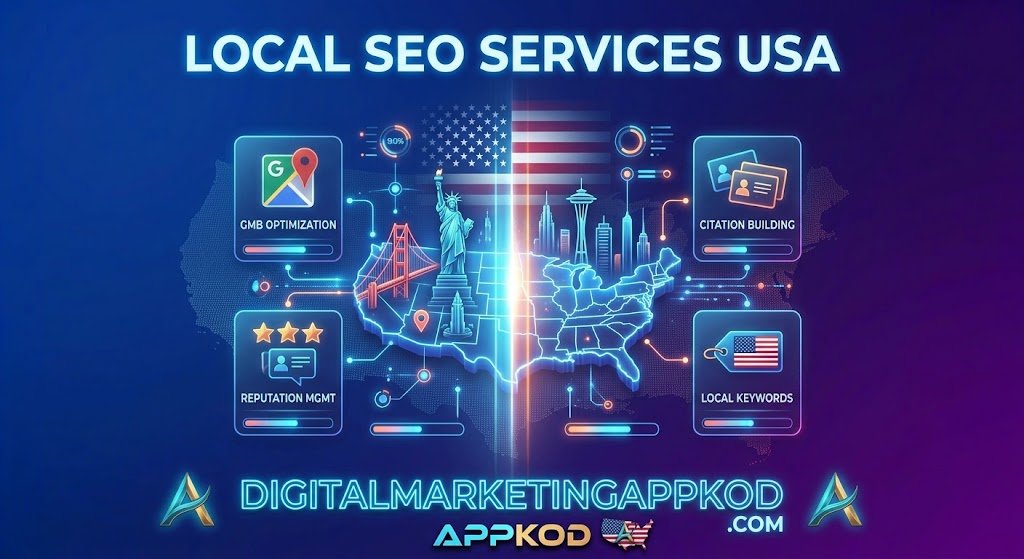
Establishing a strong local online presence is essential for business growth across the United States. Whether operating a brick-and-mortar storefront, a multi-location enterprise, or a regional service provider, appearing at the top of local search results directly correlates with customer acquisition. DigitalMarketingAppkod .com local SEO services USA Appkod has emerged as a dedicated solution designed to enhance localized organic visibility, optimize Google Business Profiles, and convert local search intent into actual phone calls and foot traffic.
Local search engine optimization involves far more than simply adding a city name to website content. It requires a strategic framework covering localized technical audits, Google Maps optimization, local citation cleanup, geotargeted content development, and strategic review management. Understanding how specialized service providers like Appkod approach these elements allows businesses to evaluate their options effectively and build a resilient search footprint.
This guide delivers an in-depth analysis of local SEO methodologies, detailing how Appkod services structure local search campaigns, the core components required for regional market dominance, common pitfalls to avoid, and step-by-step strategies to optimize your brand for US-based local queries.
Understanding Local SEO in the US Digital Landscape
Local SEO focuses on optimizing online assets to attract traffic, leads, and brand awareness from localized search queries. When users search for services “near me” or include specific geographic indicators like “in Austin TX” or “Miami plumber,” search engines prioritize results based on proximity, relevance, and prominence.
Search Query ("Plumber near me")
       │
       ▼
Google Search Algorithm Evaluation
       │
       ├── Proximity (Distance from searcher)
       ├── Relevance (Match to business listings & content)
       └── Prominence (Reviews, citations, domain authority)
       │
       ▼
Local 3-Pack & Organic Search Results
Proximity, Relevance, and Prominence
Search engine algorithms evaluate local business listings using three primary pillars:
-
Proximity: How close the business is physically located to the searcher or the explicit geographic location mentioned in the search query.
-
Relevance: How accurately a business profile and website content match what the user is searching for.
-
Prominence: How well-known and trusted the business is, determined by reviews, backlinks, local directory citations, and overall online authority.
Why USA Businesses Need Specialized Local SEO Strategies
The market environment in the United States is uniquely competitive across virtually every sector. Broad digital strategies often fail to capture high-intent local buyers because national campaigns focus on high-volume, generic keywords rather than immediate proximity intent. Utilizing localized tactics ensures that marketing investments target high-converting consumers within specific service coverage areas.
Core Components of DigitalMarketingAppkod .com Local SEO Services USA Appkod
A complete local search strategy combines on-page optimization, off-page authority building, and specialized local directory management. DigitalMarketingAppkod .com local SEO services USA Appkod structures campaigns around several core operational modules.
                  ┌─────────────────────────────────────────┐
                  │ DigitalMarketingAppkod Local SEO Framework │
                  └────────────────────┬────────────────────┘
                                       │
         ┌───────────────────┬─────────┴─────────┬───────────────────┐
         ▼                   ▼                   ▼                   ▼
┌──────────────────┐┌──────────────────┐┌──────────────────┐┌──────────────────┐
│ Google Business  ││ Local Citations &││ On-Page Local    ││ Review & Authority│
│ Profile (GBP)    ││ NAP Consistency  ││ Optimization     ││ Management       │
└──────────────────┘└──────────────────┘└──────────────────┘└──────────────────┘
1. Google Business Profile (GBP) Optimization
The Google Business Profile (formerly Google My Business) forms the cornerstone of local visibility, directly controlling placement in the Google Local 3-Pack and Google Maps.
-
Complete Profile Audit: Ensuring business name, category selection, business hours, service areas, and attributes are completely filled out and accurate.
-
Geotargeted Media: Regularly uploading high-resolution photos and videos showing the business location, products, and team members to boost engagement signals.
-
Google Posts & Updates: Publishing weekly posts featuring promotions, company updates, and localized blog articles to signal ongoing active management to Google algorithms.
2. Local Citations and NAP Consistency
A local citation is any online mention of a business’s Name, Address, and Phone number (NAP). Consistency across thousands of online directories is critical for local trust.
-
Directory Auditing: Scanning platforms like Yelp, YellowPages, Bing Places, Apple Maps, and industry-specific directories to identify existing listings.
-
NAP Alignment: Correcting inaccurate, outdated, or duplicate listings to eliminate conflicting geographic signals that confuse search engine crawlers.
-
Data Aggregator Distribution: Submitting verified business information directly to primary data aggregators (such as Neustar Localeze and Foursquare) to distribute clean data network-wide.
3. On-Page Local SEO and Geographic Content
Website structure must explicitly reflect the physical regions a company serves.
-
Location-Specific Landing Pages: Developing dedicated, high-quality landing pages for every city or region where services are offered, avoiding duplicated content across location pages.
-
Localized Schema Markup: Implementing LocalBusiness structured data (JSON-LD) to clearly communicate physical coordinates, business operating hours, payment methods accepted, and service boundaries to search engine bots.
-
Geotargeted Content Creation: Publishing blog posts, case studies, and local guides centered around community events, regional industry trends, and neighborhood specific topics.
4. Review Generation and Online Reputation Management
Online customer reviews directly influence click-through rates and prominence rankings within local pack algorithms.
-
Review Acquisition Workflows: Establishing automated review request systems via email and SMS after transactions or project completions.
-
Review Response Protocols: Crafting prompt, professional responses to both positive and negative reviews using localized keyword phrases naturally.
Comparing General SEO vs. Dedicated Local SEO Services
Understanding the distinction between traditional organic search engine optimization and localized SEO is essential when choosing an agency partner.
| Strategy Feature | General / National SEO | Local SEO (Appkod Framework) |
| Primary Goal | Nationwide domain authority and organic rankings | Map pack positioning and hyper-local search intent |
| Target Audience | Broad national or international audience | Consumers within specific geographic radii or cities |
| Key Ranking Factors | Backlinks, content depth, technical performance | NAP consistency, GBP optimization, reviews, proximity |
| Primary Assets | Blog posts, whitepapers, category landing pages | Google Business Profile, localized schema, location pages |
| Conversion Focus | Online sign-ups, digital sales, lead forms | Phone calls, driving directions, local appointment bookings |
| Measurement Metrics | Domain rating, nationwide organic traffic | Local 3-Pack visibility, call volume, physical foot traffic |
Step-by-Step Implementation Guide for Local Business Optimization
Executing a localized optimization campaign requires a structured, multi-phase approach. The following step-by-step framework outlines how local rankings are established and maintained over time.
Step 1: Conduct a Comprehensive Local SEO Audit
Evaluate your current digital presence before initiating any optimization work.
-
Verify whether your business address displays accurately across major search engines.
-
Run a local citation audit to flag inconsistent NAP records across directory sites.
-
Inspect existing website pages for proper Schema markup implementation.
Step 2: Claim and Verify Main Search Engine Profiles
Take ownership of every major map listing platform across the US web ecosystem.
-
Claim your Google Business Profile, Bing Places for Business, and Apple Business Connect profiles.
-
Complete the physical location verification process via postcard, video verification, or phone authentication as requested by the platforms.
Step 3: Implement Local Business Schema Markup
Add JSON-LD structured data to your website’s primary code to explicitly inform search engine bots about your physical operations.
{
  "@context": "https://schema.org",
  "@type": "LocalBusiness",
  "name": "Example US Service Company",
  "image": "https://example.com/assets/logo.jpg",
  "telephone": "+1-800-555-0199",
  "address": {
    "@type": "PostalAddress",
    "streetAddress": "123 Main Street",
    "addressLocality": "Austin",
    "addressRegion": "TX",
    "postalCode": "78701",
    "addressCountry": "US"
  },
  "geo": {
    "@type": "GeoCoordinates",
    "latitude": 30.2672,
    "longitude": -97.7431
  },
  "url": "https://example.com"
}
Step 4: Build Dedicated City and Service Area Pages
Avoid bundling multiple regions into a single generic page. Build individual, highly descriptive service pages for every distinct city served.
-
Include original descriptions of local work completed in that specific town.
-
Embed an official Google Map pointing directly to your business profile or location area.
-
Feature localized customer testimonials and case studies from clients in that area.
Step 5: Establish an Active Local Authority & Link-Building Strategy
Acquire high-quality local backlinks that reinforce your geographic presence.
-
Partner with local Chambers of Commerce, business associations, and local non-profits.
-
Sponsor local events, sports teams, or community initiatives to gain local media mentions.
-
Engage in local press outreach for business announcements, expansions, or community projects.
Common Challenges and Pitfalls in US Local SEO
Managing local SEO in competitive US markets comes with distinct operational challenges. Identifying these early prevents penalties and lost ranking performance.
1. Inconsistent Business Information Across Directories
Discrepancies as minor as writing “Suite 100” on one platform and “#100” or omitting the suite number on another can dilute search engine confidence in your location data.
2. Over-Optimizing Business Names on Google Business Profiles
Adding promotional phrases or keyword strings to your official profile name (e.g., “Austin Plumber – Best Emergency Plumbing Services Austin”) violates Google’s guidelines and can trigger profile suspensions. Stick strictly to your registered legal business name.
3. Creating Spammy, Thin Location Pages
Generating hundreds of programmatic location pages with identical text where only the city name changes triggers helpful content penalties. Every location page must offer unique, valuable, locally relevant information.
4. Ignoring Negative Reviews or Using Fake Feedback
Failing to respond to bad reviews damages trust, while purchasing fake reviews violates FTC regulations and risks permanent removal from Google Maps listings.
Key Benefits of Utilizing DigitalMarketingAppkod .com Services
Outsourcing local SEO management to specialized providers offers structured advantages for expanding enterprises:
-
Scalable Citation Management: Eliminates manual directory submission errors through centralized data management systems.
-
Hyper-Targeted Keyword Mapping: Targets localized long-tail queries that carry immediate buying intent.
-
Proactive Reputation Protection: Establishes systematic review request pathways to maintain high rating averages.
-
Transparent Performance Tracking: Focuses reporting on actionable metrics such as trackable phone calls, direction requests, and local contact form conversions rather than vanity metrics.
8 Frequently Asked Questions (FAQs)
What is DigitalMarketingAppkod .com local SEO services USA Appkod?
It refers to specialized local search engine optimization solutions tailored for businesses operating in the United States, offered through the Appkod framework to improve Google Maps positioning, local directory visibility, and region-specific organic search rankings.
How long does it take to see results from local SEO campaigns?
Initial improvements in local business profile completeness and directory consistency typically show within 30 to 60 days. However, noticeable jumps in competitive local map rankings and sustained organic traffic increases generally take 3 to 6 months depending on market competition.
Why is NAP consistency important for local SEO?
NAP (Name, Address, Phone Number) consistency signals to search engine algorithms that your physical business data is legitimate and reliable. Inconsistent information across different platforms creates ambiguity, lowering domain prominence and local map pack rankings.
What is the Google Local 3-Pack and why does it matter?
The Local 3-Pack is the prominent map section displayed at the top of Google search results for local queries, displaying the three top-rated local listings. Securing a spot in this 3-Pack delivers significantly higher click-through rates compared to standard organic text links.
How do customer reviews impact local SEO rankings?
Online reviews represent a major prominence signal within Google’s local search algorithm. High star ratings, consistent review velocity, and positive keyword mentions within customer feedback directly enhance local search rankings and overall consumer conversion rates.
Can service-area businesses without a physical storefront use local SEO?
Yes. Businesses that travel to customers (such as plumbers, electricians, or mobile consultants) can configure their Google Business Profile as a Service Area Business (SAB). This allows them to define coverage areas while keeping their physical home address hidden from the public.
How do location-specific landing pages help multi-location businesses?
Dedicated location pages allow multi-location enterprises to tailor their on-page SEO, schema markup, and content to specific cities. This targeted approach prevents internal keyword cannibalization and provides a tailored user experience for residents of each region.
What structured data is best for local SEO?
The LocalBusiness schema type (and its sub-types like Plumber, Dentist, or Restaurant) formatted in JSON-LD is best. It provides search engines with standardized machine-readable data detailing your physical address, opening hours, geolocation, and contact methods.
Conclusion
Mastering local search is vital for any enterprise aiming to secure a dominant footprint across US regional markets. Success requires an integrated approach: maintaining absolute NAP consistency across directories, continuously optimizing your Google Business Profile, creating helpful geotargeted web content, and maintaining a healthy stream of authentic customer reviews.
By leveraging structured approaches like those featured in DigitalMarketingAppkod .com local SEO services USA Appkod, businesses can build lasting authority in local search results. Staying ahead of algorithmic updates and prioritizing genuine user experience ensures sustained visibility, driving consistent phone calls, foot traffic, and revenue growth. Evaluate your current local search audit metrics today, address structural content gaps, and refine your geographic digital footprint for long-term growth.